The Forgotten Constitution (II): The Right to Enter Public Service
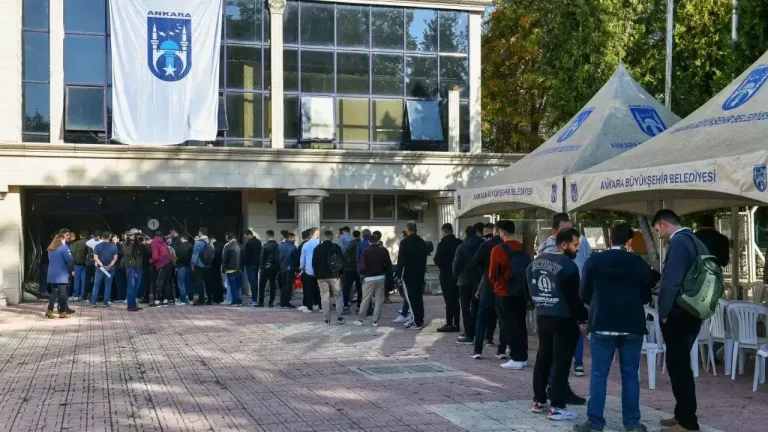
In pre-modern periods, when political power did not diffuse downward by incorporating ordinary people / the populace, and was not

Born in Ankara in 1988, Kutlu completed his undergraduate education at Başkent University Faculty of Education, Department of Turkish Language and Literature Teaching between 2006 and 2012, and at Mainz Johannes Gutenberg University Institute of Oriental Studies in Germany between 2009 and 2010. He then obtained his master's degree in 2015 from Gazi University, Social Sciences Institute, Department of Classical Turkish Literature, with a thesis titled ‘A Structural and Content-Based Comparison of Love Mesnevis and Knightly Romances.’ During the same period, Kutlu worked as a visiting graduate student at Bilkent University's Faculty of Humanities and Literature, Department of Turkish Literature. In 2015, he began his doctoral studies in the Department of Classical Turkish Literature at the Graduate School of Ankara Hacı Bayram Veli University, which he completed in 2023 with his thesis titled ‘A Theoretical Analysis of Abdulvasi Çelebi's Halil-nâme Mesnevi, Contextual Index and Functional Dictionary.’ and was awarded the title of Dr. In 2016, he was awarded the ‘Promotion of Turkmenistan's Culture, Arts and Literature’ award in Ashgabat for his work on Mahtumkulu's Turkish-Turkmen Divan, published by TİKA, in collaboration with the scientific committee he joined. After completing his undergraduate education in 2012, Kutlu began working as a research assistant in the same department and was appointed as an Assistant Professor in the Department of Turkish and Social Sciences Education at Başkent University Faculty of Education in 2023. Kutlu, who has served as an editor for various literature and thought journals, continues to serve on the editorial board of the Başkent University Journal of Education. He has participated as a speaker in many international workshops and symposiums abroad and in Turkey on Turkish Literature, Ottoman Cultural History, History of Education, History of Culture and Civilisation, History of Turkish Thought, History of Christian and Islamic Thought, History/Philosophy of Science, and Orientalism, and has given lectures at various literature and thought platforms. Kutlu has authored numerous books and book chapters, as well as articles in national and international indexed journals in these fields. He continues his work as an Assistant Professor at the Faculty of Education at Başkent University. He teaches courses on Ottoman Turkish, History of Turkish Literature, World Literature, Culture and Language, History and Philosophy of Science, Sustainable Development and Education, History of Turkish Education, Human Rights and Democracy Education, and Media Literacy in the Department of Turkish and Social Sciences Education.

In pre-modern periods, when political power did not diffuse downward by incorporating ordinary people / the populace, and was not
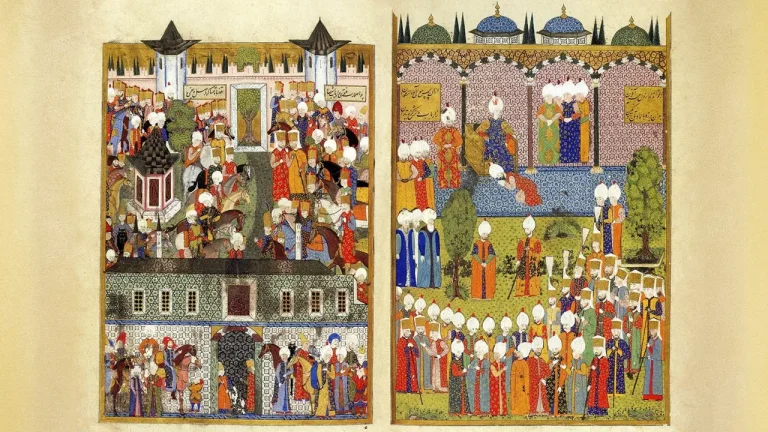
In semiotic literature, there is a paradoxical thesis we encounter: if a system of language is not capable of constructing

In the 21st century, global competition is no longer defined solely by economic size or military capacity; rather, the power

For a school of thought to attain continuity, it must produce a robust body of knowledge concerning truths and values.

The semantic shift that the concepts of “elite” and “elitism” have undergone in public discourse reflects not only political polemics,

With the end of the Cold War, the multipolar tendencies that emerged in the international system created opportunities for rising

The greatest misfortune that the term “constitution” has suffered in Türkiye is that it circulates in public discourse through agendas

Three years have passed since the February 6 earthquake. This great catastrophe laid bare not only the painful consequences of

Three years have passed since the earthquakes of February 6. In my devastated hometown of Hatay, I have found myself

The paradox of “jobless growth” that manifested itself in the Turkish economy following the 2001 financial crisis has functioned as

In a written statement issued by the Council of Higher Education (YÖK), data concerning the placement results of the 2025

The concept of gender equality continues to provide an indispensable analytical framework for understanding the challenges faced by women in