
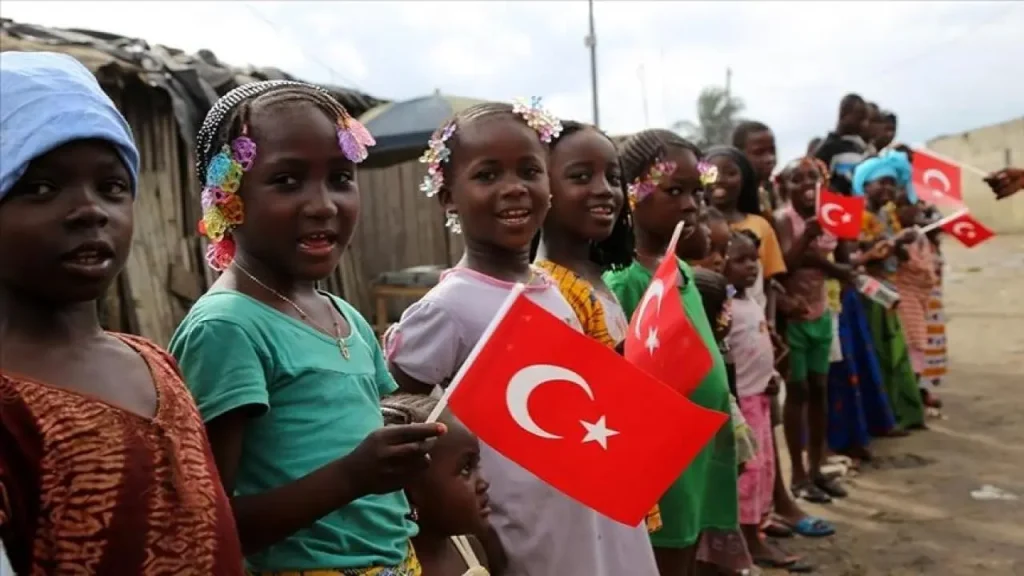

With the end of the Cold War, the multipolar tendencies that emerged in the international system created opportunities for rising powers to diversify their foreign policy visions and expand into new geographical regions. Türkiye’s Africa policy was shaped within this context; it was initially grounded in the Africa Action Plan adopted in 1998 and gradually evolved into a more institutionalized and multidimensional framework throughout the 2000s. Today, the African continent stands out for Türkiye not merely as an economic market, but also as a space where diplomatic engagements, security strategies, humanitarian diplomacy initiatives, and development cooperation intersect. However, Türkiye’s efforts to deepen its presence across the continent have inevitably brought about competition with global and regional actors whose spheres of influence in Africa have traditionally been strong.
The Development Process of Relations
The “Africa Action Plan” announced by Türkiye in 1998 was further advanced in 2003 through the “Strategy for the Development of Economic Relations with African Countries.” As a result of this strategy, a series of trade and economic agreements were concluded with African states. In fact, Turkish Ministry of Foreign Affairs officials had previously undertaken several policy initiatives toward Africa. During the decolonization period, Türkiye adopted a supportive stance toward the United Nations membership of newly independent African states. Subsequently, diplomatic missions were opened in several African countries, including Libya, Nigeria, Senegal, Kenya, Morocco, and Tunisia. Furthermore, Türkiye declared 2005 as the “Year of Africa” and in the same year obtained observer status at the African Union. As a result of these rapidly developing relations, Türkiye was declared one of the continent’s strategic partners at the 10th African Union Summit in 2008. Today, Türkiye holds a highly influential position as one of the Union’s nine strategic partners. [1]
On the other hand, the visit of then–Prime Minister Recep Tayyip Erdoğan to Mogadishu during the humanitarian crisis that unfolded in Somalia in 2011 stands out as a historic turning point that altered the course of Türkiye’s Africa policy. During this visit, Erdoğan not only declared Türkiye’s support for Somalia but also sought to draw the attention of the international community to the humanitarian crisis unfolding in the country. This initiative can be interpreted not only in terms of humanitarian assistance but also as a diplomatic move that positioned Türkiye as an emerging humanitarian actor in Africa within the international system. [2]
The Africa Partnership Policy announced in 2013 carried the opening process onto a more inclusive and egalitarian foundation. Unlike traditional donor–recipient relationships, this policy—based on the principles of mutual respect, equality, and win–win cooperation—restructured Türkiye’s relations with African countries on the basis of long-term, sustainable, and strategic partnerships. Institutionalized through the 2014 Malabo and 2021 Istanbul summits, this partnership model has enabled the implementation of concrete projects across a broad spectrum ranging from political dialogue to trade, and from education to security.
Parallel to these developments, diplomatic relations between Türkiye and African countries have also expanded significantly. While Türkiye is represented across the continent through 44 embassies and 6 consulates general, 38 African countries are likewise represented in Ankara at the ambassadorial level. Türkiye’s presence on the continent is sustained not only through diplomatic missions but also through institutions such as approximately 210 Türkiye Maarif Foundation schools, Turkish Cooperation and Coordination Agency (TİKA), Turkish Red Crescent, and the Presidency of Religious Affairs (Türkiye). [3]
Deepening diplomatic and political relations have also found tangible reflection in the economic and commercial sphere. As of 2024, Türkiye’s trade volume with Africa has reached 36.7 billion dollars, marking a significant increase from the level of 5.4 billion dollars recorded in 2003. Moreover, the Turkish private sector has made substantial contributions to African economies by undertaking more than 2,000 projects across the continent, generating an investment volume of approximately 92 billion dollars. [4]
Geopolitical Competition and Stability Risks in Türkiye’s Africa Policy
Although Türkiye has made significant progress in its political and economic relations with Africa, it also faces certain risks and challenges in this process. First of all, a considerable imbalance is evident in the sectoral distribution of trade relations with the continent. The vast majority of investments undertaken by the private sector are concentrated in the construction sector, while investments in other sectors remain limited. This situation confines economic cooperation between Türkiye and African countries to a short-term structure largely limited to project-based activities. For long-term and sustainable economic relations, it is undoubtedly necessary to strengthen investments outside construction, particularly in sectors such as energy, agriculture, industry, and technology.
Türkiye’s investments in Africa also display a regionally uneven distribution. Approximately 60% of the investments on the continent are directed solely toward East Africa. Countries such as Somalia, Ethiopia, and Sudan stand among those where Türkiye’s trade and economic cooperation is strongest. However, the civil war that broke out in Sudan in April 2023 and continues to this day has seriously disrupted Türkiye’s economic activities in that country.
Meanwhile, East Africa—and particularly the Horn of Africa—has recently become an arena of competition among numerous global actors, including European countries, Russia, the United States, China, Israel, and Gulf countries. In December 2024, Türkiye assumed an active mediation role in a dispute between Ethiopia and Somalia that carried a high potential for conflict, persuading the parties to sign the Ankara Declaration and thereby preventing a regional crisis. [5] Although this initiative demonstrates Türkiye’s growing influence in the region, the activities of the United Arab Emirates and Israel in particular emerge as risk factors that complicate Türkiye’s position. The attempts by the UAE and Israel to establish military bases in Somaliland and, most recently, Israel’s recognition of Somaliland’s independence in December can be interpreted, in a sense, as efforts to balance Türkiye’s rising influence in the region.
Although approximately 35% of Türkiye’s total trade volume in Africa is conducted with North African countries, this presence is not evenly distributed across the region. For example, relations with Egypt have largely progressed with a focus on the defense industry, while trade with Libya has been shaped primarily around energy imports. Despite historical and geographical proximity, political instability and security risks in the region lie behind the failure to fully realize the potential of these relations. Indeed, the uncertainties that emerged in the aftermath of the civil war in Libya have adversely affected large-scale infrastructure projects undertaken by Turkish companies in the construction and energy sectors. At the same time, Türkiye’s strategic competition with Egypt and Gulf countries in the region complicates the implementation of policies toward North Africa and casts a shadow over bilateral relations.
Relations with West Africa occupy a relatively smaller place in Türkiye’s Africa policy compared to North and East Africa. However, due to political and military developments in recent years, this region has begun to appear more frequently on the agenda. In previous years, Türkiye had rather limited economic relations with West African countries, with the exception of Nigeria. However, the military coups that have taken place in several countries of the region since 2020 have brought about profound changes in regional dynamics. The coups in former French colonies such as Mali, Niger, and Burkina Faso have reduced France’s influence in the region. The military regimes that took power in these countries have turned toward Russia rather than France in terms of security cooperation, resulting in the growing presence of the Russian private military company known as the Wagner Group. However, due to the criticism Russia has faced both as a result of the war in Ukraine and the unlawful and excessively violent actions attributed to the Wagner Group in Africa, the need has emerged in West Africa for new actors in the field of security cooperation. At this point, Türkiye has begun to develop significant military and defense cooperation with Niger, Burkina Faso, and Mali, largely due to the rapid development of its defense industry products in recent years as well as its experience in counter-terrorism. Nevertheless, political instability in these countries and intensifying global competition can be considered the most significant tests for Türkiye’s West Africa policy.
Türkiye’s Growing Role in Africa’s Peace and Security Architecture
In recent years, Türkiye has been increasing its presence in the defense sector across Africa. [6] As of the end of 2023, defense industry cooperation agreements have been signed with more than 25 African countries. Why, then, are African states turning to Türkiye for cooperation in the defense sector? Today, more than 40 regions across Africa face the threat of armed conflict, a situation that has led African states to diversify their defense cooperation partners. As a result, defense expenditures on the continent have reached approximately 70 billion dollars in recent years, with particularly significant increases observed in countries such as Burkina Faso and Mali, which are reshaping their security architectures while confronting serious threats such as terrorism and military coups. [7] African countries tend to view Türkiye as a more reliable actor compared to traditional defense cooperation partners. This perception is largely rooted in factors such as Türkiye’s lack of a colonial past, historical and cultural proximity, and its policy of non-interference in domestic affairs. Furthermore, Türkiye is able to offer effective solutions tailored to the nature of existing threats by taking into account the limited resources, technological infrastructure, and human capacities of African countries. The advantages provided by Turkish defense industry products have been particularly notable in conflict zones such as Libya, Burkina Faso, and Ethiopia. Indeed, Burkina Faso has regained significant territorial control against terrorist organizations through the use of Turkish UAVs and armed UAVs, a development that has contributed to Türkiye’s emergence as an important actor in security cooperation on the continent. [8]
Over the past seven years, demand from African countries for Türkiye’s defense industry products has increased dramatically. Prior to 2017, Türkiye exported arms in Africa only to Tunisia and Mauritania. Following the rise in the production of Turkish-origin armed UAVs, arms exports began to expand in 2018 to four additional African countries. In 2021, agreements on arms exports were reached with twelve new African states. Between 2014 and 2024, Tunisia emerged as the African country importing the largest volume of Turkish defense industry products, with agreements totaling 85 million dollars. During the same period, Chad, Libya, Morocco, Rwanda, and Burkina Faso each imported approximately 30 million dollars’ worth of arms from Türkiye. As a result of these rapidly developing relations, the total value of Türkiye’s arms exports to Africa between 2014 and 2024 reached approximately 370 million dollars, of which 70 percent occurred after 2021. [9]
The growing export of defense industry products to Africa may provide Türkiye with advantages in several respects. Soft power factors—such as the absence of a colonial legacy, the principle of non-interference in domestic affairs, and cultural and historical proximity—contribute to Türkiye’s positive image on the continent, while cost-effective, flexible, and user-friendly defense systems appeal to the limited budgets of many African countries. The expanding export portfolio across land, air, and naval forces—illustrated, for example, by the sale of naval vessels to Nigeria—demonstrates both the diversity and the growing capacity of Türkiye’s defense industry. These defense-sector partnerships also create opportunities for deeper engagement with countries across the continent. Indeed, following the establishment of defense industry cooperation with Nigeria, Nigerian President Bola Ahmed Tinubu paid an official visit to Ankara in January 2026, during which nine separate agreements were signed in fields including the economy, military cooperation, culture, trade, and education.
As illustrated by the Nigerian case, defense cooperation provides Türkiye not only with military benefits but also with strategic depth in diplomatic, political, and economic domains. However, this process also involves several risks. Türkiye’s rising influence on the continent has drawn the attention of former colonial powers—particularly France—as well as global and regional actors such as the United States, China, Russia, Israel, and the Gulf countries, thereby generating an environment of intense geopolitical competition. Furthermore, agreements concluded with countries frequently experiencing coups and political instability carry the risk of being disrupted following regime changes. The possibility that defense products may be used by authoritarian regimes to suppress domestic opposition could increase human-rights-based criticisms directed at Türkiye and damage its international image. In addition, expanding exports create long-term obligations for Türkiye in areas such as technology transfer, maintenance, and spare parts supply, while economic fragilities in African countries may lead to payment difficulties. At the same time, Türkiye’s potential perception as a party in counter-terrorism operations could lead radical organizations to target Turkish companies and personnel. Moreover, an excessive concentration of the defense industry in the African market could increase the sector’s vulnerability in the face of sudden political crises or market contractions.
Another area in which Türkiye has exerted influence within Africa’s peace and security architecture has taken shape around various mediation initiatives. During the 2010s, Türkiye pursued notably successful strategies in mediation efforts related to the Sudan negotiation process, the Somali Civil War, Libya, and the dispute between Somalia and Ethiopia that was ultimately resolved through the Ankara Declaration. [10] Türkiye has also expressed its willingness to mediate in disputes such as the Sudan–United Arab Emirates tensions and the conflict between Rwanda and the Democratic Republic of the Congo. In recent years, Türkiye has emerged as one of the rising actors in mediation on the continent, particularly due to its growing soft power generated through humanitarian and development assistance, its expanding diplomatic network, and its perceived neutrality. However, while such initiatives carry the potential to enhance Türkiye’s international prestige, they may also entail certain risks, including the possibility of tensions with regional powers, the risk of unsuccessful outcomes, and increased security threats against Turkish personnel and assets.
In conclusion, it can be said that Türkiye’s Africa policy encompasses a dynamic process that began with the “Africa Action Plan” in 1998 and gradually evolved into a strategic partnership. Through a multidimensional network of relations spanning economic, diplomatic, humanitarian, and military domains, Türkiye has become an important actor on the continent. Nevertheless, these expanding relations also bring with them several challenges, including regional imbalances, global competition, political instability, and security risks. The success of Türkiye’s Africa policy will increasingly depend on its ability to move beyond the construction sector and develop long-term and sustainable cooperation in areas such as energy, agriculture, industry, technology, and defense, while at the same time maintaining balanced relations with both regional and global actors. In this process, particular attention should be paid to broadening the social and economic base of bilateral relations and to creating greater sectoral diversification in commercial activities. At the same time, humanitarian diplomacy, soft power, and mediation capacity stand out as critical elements that strengthen Türkiye’s presence in Africa. Through this comprehensive and multidimensional approach, Türkiye can both contribute to the development of the continent and consolidate its position as a global actor.
References
[1] “Minister Fidan to attend the Third Ministerial Review Conference of the Türkiye–Africa Partnership.” Anadolu Agency. https://www.aa.com.tr/tr/gundem/bakan-fidan-turkiye-afrika-ortakligi-ucuncu-bakanlar-gozden-gecirme-konferansina-katilacak/3373776
[2] Nur, A. M. (2021). The Turkish Sun Rising in Africa. Kriter Dergi. https://kriterdergi.com/dosya-afrikada-turkiye/afrikada-dogan-turk-gunesi
[3] Türkiye–Africa Relations. https://www.mfa.gov.tr/turkiye-afrika-iliskileri.tr.mfa
[4] “DEİK Holds the Meeting ‘Bridging Continents: Türkiye–Denmark EPC Projects Partnership in Africa.’” https://www.deik.org.tr/basin-aciklamalari-deik-kitalari-birlestirmek-turkiye-danimarka-epc-projeleri-afrika-da-ortaklik-toplantisini-gerceklestirdi
[5] Ethiopia and Somalia agree to end bitter Somaliland port feud. https://www.bbc.com/news/articles/cvgr7v1evvgo
[6] Alemdar, A. “The Impact of the Turkish Defense Industry on Africa’s Understanding of Defense and Security.” https://kriterdergi.com/dosya-afrika/afrikanin-savunma-ve-guvenlik-anlayisinda-turk-savunma-sanayii-etkisi
[7] Mürsel, B. (2022). A Rising Power in Africa’s Defense: Türkiye. Anadolu Agency. https://www.aa.com.tr/tr/analiz/afrikanin-savunmasinda-yukselen-guc-turkiye/2597008#
[8] “Burkina Faso: Nearly 70% of the territory is now under state control, compared to 40% in 2022.” https://counteriedreport.com/burkina-faso-nearly-70-of-the-territory-is-now-under-state-control-compared-to-40-in-2022/
[9] Ibrahim, S. (2025). “Türkiye Becomes an International Actor by Exporting Arms to 18 African Countries.” Fokus Plus. https://www.fokusplus.com/odak/turkiye-18-afrika-ulkesine-silah-ihrac-ederek-uluslararasi-aktor-haline-geldi
[10] “How Turkey Became Africa’s Mediator.” https://mediate.com/news/how-turkey-became-africas-mediator/