
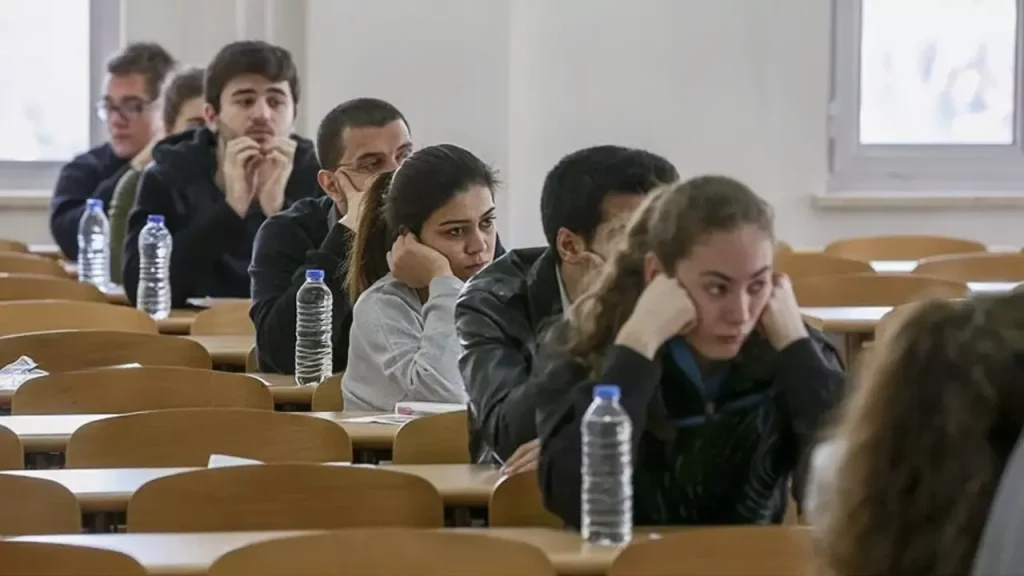

In its written statement, the Council of Higher Education (YÖK) disclosed data regarding the placement results of the 2025 Higher Education Institutions Examination (2025-YKS). According to the Council, 20.5 percent of candidates were placed in their first preference, 12.1 percent in their second preference, and 9.3 percent in their third preference; thus, a total of 42 percent of candidates were admitted to one of their top three choices. Accordingly, among the 2,560,649 candidates who took the examination, a placement score was calculated for 2,310,599 of them. Of these, 1,412,734 candidates submitted preference lists in order to compete for approximately 840,000 available quotas determined for this year. When all programs of formal education, open education, and distance education are taken into account, a total of 785,186 out of the 1,412,734 candidates who submitted preferences earned the right to enroll in a higher education institution. In other words, only 55.6 percent of the 1,412,000 candidates who made a preference were able to enter a university. Merely 42 percent of candidates were placed in one of their first three choices. Six out of every ten students, therefore, will not be able to study in the faculty they desire nor pursue the profession they aspire to. These figures have sparked public debate about the emergence of what is referred to as the “Reluctant Student” model.
If one were to analyze this statement by YÖK from the perspective of the sociology of education, there is little doubt that significant conclusions would emerge. Such an analysis may focus on core concepts such as inequality in education, critiques of meritocracy, student motivation, and the structural problems of the education system.
Inequality of Opportunity in Education and Structural Problems
The data clearly reveal the structural inequalities and limited opportunities within the Turkish education system. The fact that only 785,186 out of the 2,560,649 candidates who sat for the exam were able to be placed in a program demonstrates how restricted access to higher education remains. This situation leads to a questioning of the concept of meritocracy, which is frequently debated in the sociology of education. Meritocracy is typically defined as a system in which the most successful and talented individuals attain the best positions. However, the fact that a student who scored 468.54 points and ranked 324th could not be admitted to the department they desired illustrates that the system is shaped not only by talent but also by limited quotas and intense competition. This reveals that individual effort alone is insufficient in education and that structural constraints play a decisive role.
The 2025 YKS data reveal several key issues regarding access to higher education in Türkiye, equality of opportunity, and structural problems:
It is evident that a structural bottleneck exists within the exam-centered system. Although approximately 2.5 million candidates sat for the examination, only 785,000 were able to enter higher education. This ratio indicates that despite the mass expansion of the education system, there remains a significant supply-demand imbalance in higher education. Educational success has become dependent less on individual abilities and more on examination performance and competitive conditions. In parallel with Pierre Bourdieu’s thesis of “reproduction through education,” this situation increases the likelihood that socio-economically advantaged groups will achieve higher levels of success.
The problem also reveals inequality of opportunity and the role of socio-economic background. The fact that the rate of placement within the first three preferences is only 42 percent indicates that a significant portion of students are directed not to the departments they actually desire, but to the vacant quotas offered by the system. Students from low-income families, in particular, are disadvantaged in the competitive examination environment because they lack access to quality secondary education, private tutoring, preparatory courses, and private schools. This picture demonstrates that class-based inequalities are reproduced through the education system.
There are empirical studies supporting this assertion. When the family profiles of students enrolled in high-quality schools are examined from a sociological perspective, it becomes apparent that the overwhelming majority are children of individuals who possess both economic and cultural capital (Atmaca, 2019: 80). The principal finding of Atmaca’s empirical research is that there exists a clear social differentiation between students with high and low academic achievement and their families, and that a mechanism reproducing this structure is continuously at work. In other words, this structure constantly reproduces itself. Many factors may contribute to high academic achievement. However, when a hierarchy is established among these parameters, it becomes evident that the strategies developed by families through the use of different forms of capital they possess play a decisive role in producing and predicting academic success. The results of the research show that families who lack sufficient access to one or more of these forms of capital are unable to develop effective actions or strategies that would support their children’s academic achievement (Atmaca, 2019: 224). This situation demonstrates that educational success is not solely the result of individual effort but is also shaped by social resources and the family’s position, thereby highlighting how inequalities are reproduced through the education system.
The fact that the students attending the elite schools included in the sample overwhelmingly come from families with high social status corresponds to the relationship established by Pierre Bourdieu between social origin and educational trajectory. It is therefore not a coincidence that the children of elite groups attend elite schools, while the children of individuals located in the lower strata of the social space attend schools categorized at lower levels (Atmaca, 2019: 227).
Similarly, the study conducted by Yazgan and Suğur reaches conclusions that support Bourdieu’s thesis, much like Atmaca’s research. In Türkiye, during the transition process to secondary education, students become differentiated not only according to their level of academic achievement but also according to their socio-economic positions. The socio-economic status of students’ families can provide significant clues about the type of secondary education institution the student will attend. The families of students who enroll in vocational high schools generally have income levels, educational attainment, and labor market positions below the average. It is commonly observed that children from lower or lower-middle-class families tend to choose vocational high schools both to acquire a profession and, if possible, to retain the option of attempting university admission (Yazgan-Suğur, 2018: 275–276).
Şahin’s field research sought to understand inequality of opportunity in education in Türkiye and the impact of individuals’ educational decisions on educational outcomes, arguing that these decisions contribute to the production and reproduction of social inequalities (2019: 4). According to this approach, the questions asked in examinations about particular subjects direct students who have both interest and aptitude in those subjects toward higher-level institutions that offer more qualified education and, consequently, toward a higher-quality life. At the same time, other students are effectively confined to studying in less qualified schools and working in less qualified occupations. Evaluating equality of opportunity in education solely in terms of access to educational institutions carries the risk of overlooking the problems that arise when individuals are not provided with education aligned with their interests and abilities (Şahin, 2019: 282).
According to the results of the research, differences in equality of opportunity in education have also been identified between girls and boys. The outcomes of the interviews revealed that boys are more advantaged than girls in terms of access to education (Şahin, 2019: 285). In particular, it was concluded that girls from families with low socio-economic status do not enjoy equal opportunities in education. By contrast, it was observed that families with high socio-economic status tend to treat their daughters and sons equally, providing all of their children with the full range of educational opportunities without gender-based discrimination.
Another conclusion that can be drawn from the data is the phenomenon of massification in higher education accompanied by a decline in quality. Although the number of universities and available quotas has increased (including models such as open education and distance education), the fact that only 55.6 percent of students who submitted preferences were ultimately placed demonstrates that the system faces problems both in terms of quality and access. This situation reveals that the claim that “everyone can enter university” contradicts the reality that not everyone can enter the university they desire and that the number of high-quality faculties and departments does not meet demand. As a result, many professional aspirations remain unfulfilled, generating widespread social disappointment. The fact that six out of every ten students cannot study in the faculty they desire indicates a mismatch between individual career expectations and the structure of the education system. This mismatch produces anxiety about the future, hopelessness, and broader social dissatisfaction among young people. In the long run, it increases the risk of brain drain, unemployment, and stagnation in social mobility.
Professor Mahmut Özer (2025), while evaluating the 2025 YKS data, draws attention to striking findings regarding the supply–demand balance in higher education. Until 2015, the rate at which final-year high school students were placed in higher education programs steadily increased, reaching 53 percent—meaning that one out of every two graduates could enter university. However, after 2015 this trend reversed, and the rates began to decline continuously: 49.2 percent in 2016, 34.9 percent in 2017, 33 percent in 2022, approximately 32 percent in 2024, and 28 percent in 2025. Consequently, only one out of every four graduates has been able to access higher education.
In addition to the decline in the placement rate, there has also been a growing tendency among students whose scores were calculated to refrain from submitting preferences. The rate of not submitting preferences increased from 40.6 percent in 2022 to 44.8 percent in 2023, 50.2 percent in 2024, and 51.5 percent in 2025. This year, only 48.5 percent of final-year high school students who sat for the exam submitted preferences, while more than half refrained from doing so. The situation among those who were placed is also noteworthy. In 2025, only 28 percent of high school graduates were admitted to any higher education program. Of these, only 16 percent were accepted into undergraduate programs, meaning that approximately 136,000 students were able to enter four-year degree programs. By comparison, this rate stood at 26 percent in 2015. These data demonstrate that, despite the expansion of higher education capacity, young people’s access to university education has experienced a significant contraction (Özer, 2025).
The deepening of structural problems in education can be attributed to the fact that the education system in Türkiye still possesses a structure that is centered on centralized examinations, produces inequality of opportunity, and contains imbalances between supply and demand. While education is expected to function as a channel of social mobility, it can instead be said to reinforce social stratification. Unplanned expansion in higher education, the failure to align quotas with labor market needs, and regional disparities (such as the declining attractiveness of universities in Anatolia) further aggravate this situation.
In general terms, the 2025 YKS data demonstrate that despite the massification of education in Türkiye, the principle of “equality of opportunity” has not been realized in practice. The education system has a structure that reproduces individuals’ socio-economic capital, offers high-quality higher education opportunities only to a limited segment of society, and effectively pushes the majority outside the system. This situation constitutes a serious structural problem from the perspectives of both social justice and economic efficiency.
At this point, the analysis can be deepened within the framework of Pierre Bourdieu’s concept of cultural capital.
YKS 2025 Data in the Context of Bourdieu and Cultural Capital
Within Pierre Bourdieu’s intellectual framework, the field of education in general—and schools in particular—are institutional structures that operate in ways that serve the interests of dominant groups and reinforce their hegemony. Cultural and economic institutions primarily function to establish and maintain the authority of those who possess cultural and economic capital. Schools take the habitus of dominant groups and present it as if all children had an equal chance to enter the boundaries of this habitus (Atmaca, 2019: 70). Pierre Bourdieu emphasizes the role of the education system in the “reproduction” of social inequalities. According to him, the school is not a neutral selection mechanism; rather, it is an institution that legitimizes and transmits the cultural capital of the upper classes. In terms of differences in cultural capital, the children of middle- and upper-class families are able to access both higher-quality schools and additional resources such as private tutoring, preparatory courses, and individualized academic support during the examination process. These groups are familiar with the “cultural codes” required for success in examinations. By contrast, students from lower-income backgrounds are disadvantaged in the competition of examinations because they lack access to these resources (Bourdieu–Passeron, 2014).
The views of Pierre Bourdieu and Jean-Claude Passeron strongly reflect the central theses of the sociology of education—particularly critical sociology of education—and constitute one of the most influential approaches in this field. The core axis of Bourdieu and Passeron’s work is the function of the education system in reproducing social inequalities. In terms of social origin and mechanisms of selection, they clearly demonstrate the decisive power of social origin in access to higher education and in the processes of elimination that occur throughout education—for instance, the eighty-fold difference between the probability of entering university for the child of a senior executive and that of the child of an agricultural worker (Bourdieu–Passeron, 2014: 17). The education system does not merely transmit abilities; it also transfers class advantages, thereby “naturalizing” inequality. The true power held by the education system lies in its ability to legitimize these inequalities through a system that appears to be based on merit and talent—namely examinations. Although examinations claim to provide formal equality, by subjecting individuals who possess different forms of cultural capital to the same criteria, they actually point toward the opposite of substantive justice. This phenomenon is closely related to Bourdieu’s concept of symbolic violence (Bourdieu–Passeron, 2014: 110). All modern institutions—including the education system, the capitalist market, and even the state itself—tend to promise more than they can deliver. While they present themselves as working for the common good of society, in reality they reproduce social inequalities (Calhoun, 2016, p. 86).
The perspectives of Pierre Bourdieu and Jean-Claude Passeron locate the source of inequalities not merely in material differences but primarily in cultural differences. In this context, the role of cultural capital becomes particularly significant. Unequal educational outcomes are attributed to factors such as intellectual tools, cultural habits, accumulated knowledge, and the inclination to conform to the values, norms, and models that govern the school. These are advantages inherited from the family and conceptualized by Bourdieu as cultural capital. This cultural disposition—habitus—which leads students to feel that they are either “in the place where they belong” or “in a place where they do not belong,” also constrains their choices of fields and departments. The direct elimination of students from disadvantaged backgrounds or their “channeling into faculties of literature” constitutes a concrete manifestation of class-based and cultural habitus within the field of education (Bourdieu–Passeron, 2014: 112–113).
The authors also draw attention to the role of gender in education, in addition to class inequalities rooted in cultural capital. Influenced by traditional models concerning the division of labor between genders and the differentiation of “aptitudes,” the tendency for women to be directed toward faculties of literature while men are directed toward faculties of science demonstrates horizontal differentiation within education (i.e., differentiation across academic fields). The fact that gender-based disadvantage manifests itself primarily through women being “channeled into faculties of literature” suggests that despite women’s presence in higher education, inequality persists through their concentration in fields perceived as having lower status and economic returns (Bourdieu–Passeron, 2014: 18–19).
Critical sociology not only identifies inequalities but also points toward ways of overcoming them. It further draws attention to the rejection of the ideological trap that legitimizes the cultural privileges of privileged classes as “individual gifts” or “personal merit.” When the popular classes accept this form of “class racism,” the process of social reproduction succeeds. The authors emphasize that the genuine democratization of the education system cannot be achieved solely through political will. What is required instead is a “rational pedagogy” grounded in the sociology of cultural inequalities. Such an approach implies a model of education that takes inequalities into account and aims to compensate for the deficiencies in cultural inheritance experienced by disadvantaged students—in other words, a teaching model sensitive to differences (Bourdieu–Passeron, 2014: 113).
These views of Pierre Bourdieu and Jean-Claude Passeron define the education system as a mechanism that conceals and legitimizes social inequalities. Reproduction is not limited to inequalities in access; it deepens through cultural capital, habitus, and choices of fields and departments. The path toward genuine democratization therefore lies in developing a rational pedagogy grounded in sociological knowledge capable of systematically neutralizing cultural inequalities.
From the perspective of the habitus effect, students’ expectations regarding the educational field are shaped by the social position of their families. For this reason, while some students perceive “success” in highly prestigious fields such as medicine, engineering, or law, for others these fields remain unreachable, “idealized” aspirations. This makes the low placement rates even more dramatic. Despite the claim that the YKS provides an “objective” measurement, examination success is in fact closely tied to socio-economic advantages. In this way, the education system presents inequalities as though they were natural and deserved. In a sense, it performs a legitimizing function.
The YKS data—showing that only 42 percent of candidates were placed within their first three preferences and only 55.6 percent were able to enter university—demonstrate that upper classes maintain their advantages within the education system, while lower classes are pushed outside it.
From a broader perspective, when viewed through the lens of Pierre Bourdieu, the YKS process reinforces the advantages of groups possessing strong cultural capital while reducing the likelihood that lower classes will achieve upward social mobility through education.
The Concept of the “Reluctant Student” and the Loss of Motivation
One of the most significant findings in the data is that six out of every ten students are unable to enter the department they desire, resulting in the emergence of what may be described as a “reluctant student” model. This finding also illustrates the magnitude of the gap between individual aspirations and the opportunities offered by the system. As education fails to fulfill the aspirations of individuals, students increasingly begin to view universities merely as institutions for obtaining a diploma. From the perspective of educational sciences, this constitutes a major problem. Student motivation is one of the most critical components of the learning process. Among students with low intrinsic motivation—those who enroll in a department not by choice but as a result of options imposed by the system—several problems may arise.
For instance, academic performance may decline. A student studying in a field in which they have little interest may struggle to concentrate on coursework and therefore experience lower achievement. Students often find it difficult to participate actively in classes and demonstrate success in departments that do not align with their interests. They may also struggle to adapt to university life, experience disengagement from school, and develop tendencies toward absenteeism or withdrawal from the educational process. Another problem is professional dissatisfaction. Spending an entire career in a profession chosen out of necessity may lead to unhappiness and burnout. Among young people, concerns about unemployment, feelings of “studying in vain,” and disappointment increase.
In the sociology of education, the concept of the “reluctant student” refers to a situation in which an individual participates in the educational process unwillingly, with low motivation, and out of necessity. This condition is often closely related to structural barriers, the pressure of the examination system, and inequality of opportunity. The 2025 YKS data provide important clues in this regard. The inability to enter one’s preferred programs and the resulting unwillingness are particularly noteworthy. According to the YKS data, only 20.5 percent of candidates were placed in their first preference, while 42 percent were placed in one of their first three preferences. This situation leads students to begin their university education “reluctantly,” even if they manage to gain admission. When a student cannot study the profession they desire, they effectively become a “compulsory consumer of education.”
When analyzing the sociological background of the “reluctant student,” Bourdieu’s concept of cultural capital can once again be applied. Students with strong cultural capital tend to make more accurate preferences and thus increase their chances of entering the departments they desire, while others must settle for the departments in which they are able to find a place. In this way, reluctance becomes a class-based issue. Students are compelled to study in departments they do not want, which ultimately undermines the legitimacy of the education system.
The effects of the loss of motivation on both education and working life can also be addressed within this analysis. Reluctant students tend to exhibit patterns such as absenteeism, low grades, and a high tendency to change departments or drop out of university. This situation often extends into their professional lives after graduation. When students are directed toward professions they do not like, they face job dissatisfaction and a higher risk of unemployment. At the societal level, this picture leads to the loss of qualified labor, the inefficiency of educational investments, and a growing sense of insecurity about the future among young people.
In short, the forced expansion of university enrollment results in the phenomenon of the reluctant student. The 2025 YKS data show that despite the massification of higher education, a significant proportion of students enter university unwillingly. Rather than fulfilling the aspirations of young people, the education system directs them toward “vacancies to be filled.” This situation generates a loss of motivation and alienation at the individual level, and produces inequality of opportunity and a decline in quality at the societal level.
Professional Orientation and Social Structure
The fact that a large proportion of students cannot be placed within their first three preferences indicates that individuals’ ability to consciously plan their professional careers is significantly constrained. This situation is closely related to the concept of social mobility in the sociology of education. Education is generally regarded as a tool for climbing the social ladder. However, when individuals have limited opportunities to pursue professions aligned with their own aspirations, social inequalities may be reproduced. Students are directed not according to the professions society actually needs but according to the quotas imposed by the system. This situation prevents individuals from realizing their potential and may also lead to imbalances in the supply of qualified labor in the labor market in the future.
The data presented by the Council of Higher Education show that the higher education system in Türkiye is not merely a placement mechanism but also a complex structure that contains deep structural problems and sociological inequalities. These problems, by giving rise to new concepts such as the reluctant student, open the way for more in-depth research in the fields of educational sciences and sociology.
The 2025 YKS data provided by the Council of Higher Education offer strong clues for understanding the relationship between professional orientation and social structure from the perspective of the sociology of education. In this context, the issue can be approached through several dimensions. The first of these is professional orientation and structural constraints. According to the data, only 785,000 out of 2.5 million candidates were able to enter a higher education program, revealing a clear imbalance between supply and demand. Only 42 percent of candidates were placed in one of their first three preferences. This indicates that a significant portion of students are unable to receive education aligned with their professional aspirations. In other words, young people are directed less toward the professions they wish to pursue and more toward the vacant quotas offered by the system. As a result, “professional orientation” ceases to be an individual choice and becomes a structural necessity.
The second dimension concerns social structure and the hierarchy of professions. In Türkiye, professions such as medicine, engineering, law, and teaching are still regarded as highly prestigious and status-conferring fields. For this reason, these departments prominently appear in candidates’ preferences. However, insufficient quotas make it difficult for students to enter these prestigious professions. This situation reveals the function of the social structure in preserving the existing distribution of status. From the perspective of Pierre Bourdieu, upper classes increase their chances of entering these prestigious professions through their cultural and economic capital, while lower classes are generally directed toward professions with lower prestige.
The third dimension concerns reluctance and unwillingness in professional orientation. The data show that the majority of students are compelled to study not the profession they desire but the department they are able to secure. This compulsion, combined with the phenomenon of the reluctant student, leads to a loss of motivation both during the educational process and in professional life. Consequently, a university diploma ceases to function as a guarantee of social mobility; when young people cannot obtain the profession they desire, they develop disappointment and distrust toward the social structure.
A fourth dimension concerns professional orientation, the labor market, and social stratification. Based on the YKS data, it can be argued that the link between the education system and the labor market remains weak. Although students may wish to pursue departments with higher employment prospects, quota limitations prevent them from doing so. This situation increases both the mismatch between education and labor demand and the level of qualified unemployment. The fact that structural constraints in professional orientation are so strong further solidifies social stratification. While “desired professions” increasingly become the preserve of certain social groups, others are directed by the system toward “lower-status occupations.”
The 2025 YKS data demonstrate that professional orientation is shaped less by individual preferences and more by the hierarchy of status within the social structure and by the supply–demand dynamics of the system. The widening gap between the professions that young people aspire to and the opportunities offered by the system deepens inequality of opportunity. Rather than dismantling social stratification, the education system reinforces it. While upper classes gain access to prestigious professions, lower classes are often confronted with the reality of “reluctant studenthood” and lower-status occupations.
The “reluctant student” model indicated by the data may generate serious consequences at both the individual and societal levels. This situation can be examined under two main headings: its effects on individual future plans and its broader social consequences.
Effects on Individual Future Plans
Reluctant students tend to exhibit low motivation and academic underperformance. When students are compelled to study in departments they did not choose, their intrinsic motivation declines significantly. This situation may lead to disinterest in courses, absenteeism, and declining academic performance. Students begin to approach education as an obligatory task aimed merely at completing their studies rather than as a meaningful learning process.
Reluctant students also experience a form of identity crisis and professional dissatisfaction. In the sociology of education, career identity is an important concept. Individuals’ professional preferences are generally shaped by their interests, abilities, and values. The “reluctant student” model disrupts this process of identity formation. Upon graduation, individuals who are compelled to work in fields they did not choose may experience professional dissatisfaction, unhappiness, and burnout. As a result, they may continually reassess their career goals and frequently move between different career paths.
Reluctant students may also experience a decline in their capacity for lifelong learning. Educational sciences emphasize that lifelong learning has become increasingly important. However, students who perceive their university experience as a compulsory process may, even after graduation, be more resistant to learning new skills, developing themselves further, or exploring different fields. This situation may limit their ability to adapt to a rapidly changing labor market.
Social Consequences
The “reluctant student” phenomenon ultimately translates into a problem of qualified labor. The overall welfare of a society depends on possessing a workforce that is both highly skilled and highly motivated. A workforce composed of individuals directed toward professions they do not desire will face difficulties in terms of productivity and innovation. This situation negatively affects a society’s competitiveness. A doctor, teacher, or engineer practicing a profession they did not truly choose may not approach their work with sufficient passion or commitment. As a result, the quality of essential public services may decline.
The reluctant student phenomenon also contributes to the reproduction of social inequalities. Limitations in access to higher education and constraints in preference choices tend to affect students from socio-economically disadvantaged families more severely. Even when these students achieve high scores, they may still struggle to enter the most prestigious and financially rewarding departments of higher education. Consequently, rather than functioning as a mechanism for social mobility, the education system may become a mechanism that reproduces existing class inequalities.
Moreover, the reluctant student phenomenon may lead to brain drain and the loss of societal potential. Successful individuals who achieve high scores but cannot enter their desired departments and thus become part of the “reluctant student” model may consider going abroad in order to realize their potential. This situation can result in the country’s most talented young people seeking opportunities in other countries, thereby contributing to brain drain. The loss of the brightest minds in society may slow scientific, technological, and cultural development in the long term. In light of these data, it becomes clear that the existing system should be evaluated not only in terms of student placement success but also in terms of its effects on students’ motivation, professional satisfaction, and future potential.
Conclusion
The 2025 YKS data show that the transition to higher education in Türkiye is closely linked not only to individual measures of success but also to the social structure and socio-economic inequalities within society. The fact that only 785,000 out of the 2.5 million candidates who sat for the examination were able to enter higher education demonstrates that there is a serious mismatch between supply and demand in the education system. This situation highlights one of the central debates in the sociology of education: inequality of opportunity in education.
Within the literature of the sociology of education, education is often defined as a mechanism of social mobility that allows individuals to change their class positions. However, the fact that only 20.5 percent of students were placed in their first preference indicates that this ideal is not being realized and that young people are deprived of the ability to shape their own future plans. This situation also brings into focus the differences in “habitus” and “cultural capital” conceptualized by Pierre Bourdieu. Students from more advantaged socio-economic backgrounds are able to find alternative pathways, whereas students from lower-income families are often confined to the departments that remain available. In this way, education ceases to function as an instrument of social mobility and instead becomes a mechanism for reproducing existing social stratification.
Among students who cannot enter their desired departments, phenomena such as loss of motivation, disinterest in courses, and alienation from university life emerge. This situation is directly connected to the debates within the sociology of education concerning “alienation in education” and the “perception of a futureless life.” When education ceases to be perceived as an investment in one’s future and instead becomes merely an obligation aimed at meeting social expectations, students begin to see themselves as passive actors within the system.
The YKS is not merely a “placement examination”; it also functions as a mechanism that reproduces social stratification and limits young people’s projections for the future. In this context, while the education system promises individuals success and upward mobility, it simultaneously fails to provide the structural conditions necessary to fulfill this promise. The contradiction that emerges reinforces feelings of “futurelessness” and “social exclusion” among young people.
In conclusion, the YKS data concretely reveal one of the most fundamental issues in the sociology of education: the relationship between education and social inequality. Rather than serving as a channel of hope and social mobility for young people, education is increasingly becoming a system that produces disappointment, insecurity, and alienation. This situation signals the emergence of a “future crisis” that may have serious consequences at both the individual and societal levels.
References
Anadolu Agency (2025). Statistics on the 2025 YKS placement results announced. https://www.aa.com.tr/tr/egitim/2025-yks-yerlestirme-sonuclari-istatistikleri-aciklandi/3668586# (Accessed: 25.08.2025)
Atmaca, Taner (2019). The Reproduction of Social Inequality in Education through the Transmission of Cultural Capital. Eskişehir Osmangazi University, Institute of Educational Sciences, Department of Educational Sciences, Division of Educational Administration, Supervision, Planning and Economics. Unpublished Doctoral Dissertation, Eskişehir.
Bourdieu, Pierre – Passeron, Jean-Claude. The Inheritors: Students and Culture. Turkish translation by Levent Ünsaldı and Aslı Sümer. 2014. Ankara: Heretik Publishing.
Calhoun, C. (2016). The Main Lines of Bourdieu’s Sociology. Translated by Güney Çeğin. In Workshop and Craft: A Compilation on Pierre Bourdieu (pp. 77–131), edited by Güney Çeğin, Emrah Göker, Alim Arlı, and Ümit Tatlıcan. Istanbul: İletişim.
Özer, Mahmut (2025). The Thought-Provoking Picture in the 2025 YKS Results. Milliyet Newspaper (04 September 2025).
Şahin, Hatice (2019). Equality (and Inequality) of Opportunity in Education in Türkiye and Individuals’ Educational Decisions: The Cases of Ardahan and Karabük. Istanbul University, Institute of Social Sciences, Department of Sociology. Unpublished Doctoral Dissertation, Istanbul.
Yazgan, Ç. and Suğur, N. (2018). “Fear of Falling and Hope of Rising: A Sociological Study on Vocational High School Students’ Perceptions of Wealth and Poverty.” Journal of Sociological Research, 21, 269–310.