
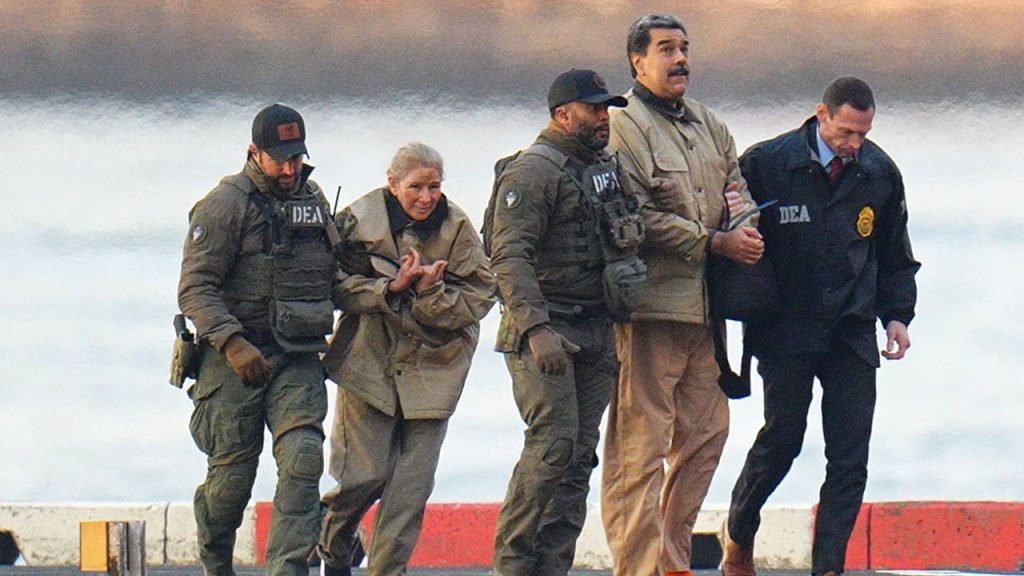

The long-standing political crisis in Venezuela has entered a new phase following a foreign intervention carried out by the United States and the arrest of [deposed] President Nicolas Maduro on charges of narco-terrorism, after which he was brought to the United States. This intervention, which developed against the 25-year “Chavismo” regime, has not only changed a government but has also constituted a moment of rupture that has shifted the balance of global politics. The United States is now facing a “day after” test. In a state structure where political institutions have been rendered dysfunctional for a quarter of a century and power has been concentrated in a single center, it remains highly uncertain whether the Venezuelan opposition will be able to govern the country effectively and re-establish institutional order.
The Significance of the Intervention for World Politics
- A Definitive Shift from the Principle of a “Rules-Based Order” to the Understanding that “Might Makes Right”: The intervention carried out by the United States in Venezuela is neither the first nor will it be the last intervention undertaken by Washington against a foreign country. However, by carrying out this intervention without referring to any international decision or norm, the U.S. administration has set a precedent after a long period.
The United States carried out a similar intervention in Panama at the end of 1989; it arrested the then Panamanian military leader Manuel Noriega and brought him to the United States on January 3, 1990—exactly 36 years before Maduro’s arrest—so that he could be tried on narcotics-related charges. Therefore, the intervention in Venezuela has an important historical precedent in that the United States, without pursuing any international legal avenue, apprehended a foreign head of state in his own country and removed him to stand trial in the United States.
However, shortly before the Panama operation, the Panamanian Assembly had declared war on the United States, and Panamanian soldiers had killed a U.S. officer stationed in the country. Moreover, the intervention took place at a time when it had become certain that the Cold War would conclude with a U.S. victory, and no other great power threat to U.S. hegemony was visible in the short term (unipolar moment). In more recent interventions—such as those in Iraq, Libya, and Yugoslavia, which have been frequently referenced following the Venezuela intervention—the United States, despite heavily manipulating international public opinion, still sought a basis of international legitimacy by relying on United Nations Security Council (UNSC) resolutions or the doctrine of “Responsibility to Protect” (R2P).
Therefore, the intervention in Venezuela constitutes a turning point for contemporary international politics in that it was carried out unilaterally and without an explicit provocation (unprovoked)—such as an attack on military personnel and/or a declaration of war—at a time when great power competition continues in a multipolar structure and the legal legitimacy of international interventions is frequently contested.
In this respect, the intervention has demonstrated that the notion of a “rules-based international order,” whose effectiveness has long been debated, no longer retains practical validity—at least for the present day. Instead, the understanding that “might makes right” has been reinforced. This situation has, in turn, created a basis of legitimacy for other great powers and middle powers to pursue interventions aligned with their own agendas. In this context, perceptions of international insecurity, as well as tendencies toward armament and/or balancing, are expected to intensify in the period ahead.
- The Return of the Monroe Doctrine and the United States’ Retrenchment into the Western Hemisphere: With the intervention in Venezuela, the United States has added another precedent to the Panama case and reinforced the message that it does not consider itself bound to seek international legitimacy when acting to preserve its interests within its adjacent geography—the Western Hemisphere. While the administration of U.S. President Donald Trump has, since taking office, failed to demonstrate decisive will and capacity in Europe and the Middle East (the Ukraine and Gaza crises), its willingness to undertake such a resolute move in its own geographical sphere—the Western Hemisphere—indicates a strategic shift from global projection toward “continental consolidation” and the reinforcement of a regional sphere of influence.
This move by the United States represents the practical implementation of the policy referred to as the “Trump Corollary,” which is widely discussed in recent U.S. foreign policy circles and considered an updated version of the Monroe Doctrine [1]. This strategy envisions the consolidation of the United States’ energy and security architecture from northern Canada to the Tierra del Fuego archipelago at the southern tip of South America.
In this context, it should be expected that the tensions previously observed along the Greenland, Canada, Mexico, and Panama axis during the early days of the Trump administration will be reignited in the near future. At the same time, interpreting the intervention in Venezuela as a policy of continental consolidation by the Trump administration will likely push other great powers and regional powers to adopt more assertive and determined policies within the geographies they consider to be their own spheres of influence.
- A Major Blow to China: The intervention in Venezuela marks the most critical rupture to date in the U.S.–China rivalry, which has been intensifying over the past decade.
China is the world’s largest oil importer, with daily imports exceeding 11 million barrels. More than 70% of China’s total oil consumption is met through imports. Although official figures suggest lower levels, when accounting for methods used to circumvent sanctions—such as the so-called “Malaysia blend”—the discounted/sanctioned oil supplied to China from the Iran–Russia–Venezuela trio constitutes approximately 41% of its total imports and nearly 30% of its overall oil demand.
Recent data indicate that, shortly before the U.S. intervention, approximately 80% of Venezuela’s total oil exports were being directed to China either directly or indirectly, and that Venezuela alone accounted for roughly 6% of China’s total oil imports [2]. Venezuela holds more than 18% of the world’s proven oil reserves, making it the country with the largest oil reserves globally. However, due to infrastructural deficiencies and sanctions, its share in global oil production remains at only around 1.3% [3]. Despite this underutilized potential, deep structural deficiencies in energy infrastructure make it difficult to extract Venezuelan oil profitably in the short term. Nevertheless, the scale of its reserves—sufficient on their own to meet approximately nine years of global oil demand—renders Venezuela an untapped and strategically indispensable long-term natural resource power.
By orchestrating regime change in Venezuela, the United States has effectively shut off one of China’s most critical sources of cheap, local-currency-denominated oil supply. At a time when Moscow and Tehran are already constrained by wars, political crises, and sanctions, the change of government in Caracas has further increased the fragility of China’s energy security, given its structural dependence on external energy sources. Therefore, while the intervention may encourage China to pursue more assertive policies within regions it considers its sphere of influence, the United States has gained a strategic advantage in the competition by exacerbating China’s energy vulnerabilities.
Moreover, China has limited itself to observing the U.S. intervention and has refrained from issuing strong criticism in its aftermath. Beijing’s inability to protect a key commercial and strategic partner against U.S. intervention is likely to undermine its image as an “alternative power” to the Western bloc in the eyes of “Global South” countries—many of which are located in Latin America and Africa.
- The De-Dollarization Trend Has Been Triggered: Venezuela’s application for membership in the BRICS bloc as the country with the world’s largest oil reserves, along with its initiatives to conduct oil trade in Yuan, has constituted a direct challenge to the status of the U.S. Dollar as the global reserve currency.
Through its intervention in Venezuela, the United States has sent a message of resolve against the search for an “alternative financial architecture,” which began with Russia’s exclusion from the SWIFT system following its invasion of Ukraine and accelerated with China’s efforts to establish alternative payment systems and currencies across BRICS. However, this use of “hard power” is likely, in the long term, to push countries in various regions of the world toward a more determined pursuit of de-dollarization.
- A More Violent Phase in Critical Minerals Competition: Venezuela possesses vast reserves of gold, coltan, and bauxite within the “Arco Minero del Orinoco” region [4]. This region, which covers approximately 12% of the country’s territory, is considered highly strategic due to its rich deposits of gold, bauxite, coltan, and other industrial minerals . Although the official gold reserves of the Central Bank of Venezuela are estimated at around 161 tons, it is widely believed that underground reserves are significantly higher.
The U.S. intervention in Venezuela has also demonstrated the scale and scope of actions that great powers may undertake within the context of competition over critical minerals. With the Venezuela intervention, this competition has entered a more intense and potentially more violent phase. In this context, geopolitical tensions surrounding critical minerals are expected to escalate further in the coming period.
The Significance of the Intervention for Türkiye
The Limits of the “Hedging” Policy Have Become Apparent: The “call for restraint by all parties” issued by the Ministry of Foreign Affairs in response to the overthrow of a government that had previously been hosted at the level of head of state and with which strong bilateral relations had consistently been emphasized is striking in that it demonstrates Ankara’s preference for a low-profile and cautious approach in the Venezuela file. This stance indicates that Türkiye has, if not formally abandoned, at least de facto suspended its long-standing “multi-dimensional foreign policy” discourse—adopted under the shadow of issues such as the procurement of F-16s and F-35s, the lifting of CAATSA sanctions, political stabilization in Syria, and domestic economic normalization—and has instead prioritized its relations with the United States. Ankara’s preference for caution in the Venezuela intervention reflects the emergence of a new constraint in Turkish foreign policy.
A Credibility Problem: Ankara’s muted response to the intervention in Venezuela is likely to undermine Türkiye’s image as a proponent of a “just world” and as an “alternative ally,” which it has sought to build in recent years across Africa and Latin America. The perception that Türkiye may not stand by its partners in times of difficulty and/or may step back when its interests clash with those of the United States is likely to result in a loss of trust along a wide arc of cooperation extending from Russia to Somalia.
Old Accounts, New Costs: The trade volume between Türkiye and Venezuela approached approximately 600 million USD annually in the 2023–2024 period [5], and the leaders of the two countries had set a target of three billion USD per year. Existing commercial relations—such as those developed by Turkish construction and mining companies in the region, as well as mechanisms like “food-for-gold” [6]—risk being recharacterized by the new regime as “complicity with the former regime” and potentially instrumentalized against Türkiye in international public opinion. Allegations that may be raised in relation to these ties, similar to the Halkbank case, could affect not only Türkiye–Venezuela relations but also Türkiye’s relations with the United States.
Regional Competition with Russia and Israel: As a consequence of the United States’ focus on the Western Hemisphere, regional actors are likely to seek to fill emerging power vacuums in the Middle East, the Eastern Mediterranean, and Eastern Europe. In this context, Türkiye will have to confront the moves of actors—particularly Russia and Israel—in a much harsher competitive environment, in the absence of U.S. mediation, prevention, and deterrence mechanisms.
Policy Recommendations
The fall of the 25-year “Chavismo” regime in Venezuela as a result of U.S. intervention represents not merely a change of government but a moment of rupture in global politics. The intervention has strategically increased both uncertainties and vulnerabilities for Turkish foreign policy, both in terms of great power competition and regional dynamics within Türkiye’s adjacent geography. In this context, the policies to be pursued may be summarized as follows:
- Preserving Strategic Autonomy: Despite being a key NATO ally and a strategic partner of the European Union, Türkiye occupies a unique geographical and political position. In a period marked by increasing uncertainty, the extent to which its foreign policy has become aligned with a single great power constitutes a risk for Ankara. Without compromising its traditional alliances and connections, and without undermining trust-based relationships, Türkiye should avoid confining its foreign policy to a single axis. Relations with Moscow and Beijing should be further developed.
- Revitalizing Regional Pacts: In order to avoid being overshadowed by the intensifying rivalry between the United States and China and to mitigate its disruptive effects, emphasis should be placed on regional cooperation and alliance models. In this regard, initiatives such as the Balkan Pact (1934) and the Saadabad Pact (1937)—which the young Republic of Türkiye had pioneered in a similar geopolitical context prior to the Second World War—should serve as models. Regional cooperation in finance, trade, and energy should be strengthened. Although a comprehensive regional security umbrella agreement may be politically unrealistic, it is possible to establish a framework based on a non-aggression understanding. The region in which Türkiye is located should be prevented from becoming a primary theatre of great power competition.
- Consolidating Social Stability: As external uncertainties intensify, domestic challenges, particularly the rising cost of living and political polarization, emerge as strategic vulnerabilities for Türkiye. In this context, steps should be taken to enhance societal welfare and public trust in political institutions. Measures that strengthen social welfare and confidence in governance should be regarded as a strategic defense effort, no less significant than the acquisition of platforms such as the F-35 or S-400.
References
[2] https://www.eia.gov/todayinenergy/detail.php?id=64544
[3] https://www.statista.com/chart/16830/countries-with-the-largest-proven-crude-oil-reserves/
[5] https://data.tuik.gov.tr/Bulten/Index?p=Dis-Ticaret-Istatistikleri-Kasim-2025-53908